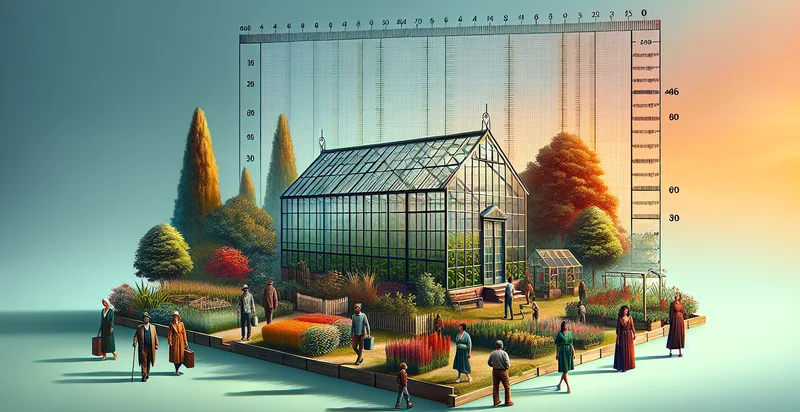
Identify height of greenhouse in feet
using AI
Below is a free classifier to identify height of greenhouse in feet. Just upload your image, and our AI will predict the height of the greenhouse in feet - in just seconds.
Create a free account to:
Get instant API credentials
Start calling the API immediately with your own keys
Track accuracy on your data
See real-time performance metrics and understand how well the model works for your specific use case
Discover better models for your data
Get recommendations for specialist models trained on your examples that are more accurate and cost-effective
How this classifier works
To start, upload your image. Our AI tool will then predict the height of the greenhouse in feet.
This pretrained image model uses a Nyckel-created dataset and has 15 labels, including 1-2 Feet, 10-20 Feet, 2-3 Feet, 20-30 Feet, 3-4 Feet, 30-40 Feet, 4-5 Feet, 40-50 Feet, 5-6 Feet and 50+ Feet.
We'll also show a confidence score (the higher the number, the more confident the AI model is around the height of the greenhouse in feet).
Whether you're just curious or building height of greenhouse in feet detection into your application, we hope our classifier proves helpful.
Related Classifiers

Need to identify height of greenhouse in feet at scale?
Get API or Zapier access to this classifier for free. It's perfect for:
- Greenhouse Design Validation: This use case involves verifying the height of greenhouses during the design phase. Designers can utilize this function to ensure that proposed structures comply with local regulations and environmental standards, ultimately facilitating better project approvals.
- Crop Yield Optimization: Agriculturalists can use the height classification function to match cultivation techniques with the ideal greenhouse height for specific crops. By analyzing the results, they can make informed decisions to maximize growth potential and optimize crop yields.
- Advanced Climate Control Solutions: This function can assist in developing climate control systems tailored to greenhouse height. By integrating this classification, businesses can automate temperature and humidity management to improve plant health and reduce energy costs.
- Insurance Assessment for Greenhouses: Insurance companies can utilize this function to assess risk and coverage options for greenhouse owners. By accurately determining the height of the structure, they can better evaluate potential damages caused by extreme weather conditions.
- Market Research for Greenhouse Suppliers: Suppliers can leverage this function to analyze market trends related to greenhouse heights preferred by customers. This data can help in formulating marketing strategies and developing new products that cater to client demands.
- Compliance and Safety Inspections: Regulatory bodies can implement this function as part of their inspection processes to ensure that greenhouses meet safety and height regulations. It aids in maintaining industry standards and protecting the environment by preventing unauthorized structures.
- Investment Risk Analysis in Agriculture: Investors can employ this function to analyze the potential risks associated with greenhouse investments based on height classifications. Understanding these dynamics aids in making informed decisions regarding funding agricultural initiatives and developments.