Identify qr code placement angle
using AI
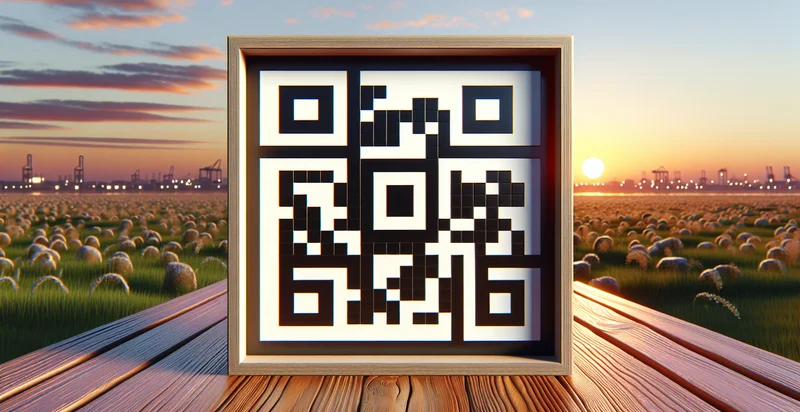
Below is a free classifier to identify qr code placement angle. Just upload your image, and our AI will predict the optimal placement angle for QR codes - in just seconds.
Create a free account to:
Get instant API credentials
Start calling the API immediately with your own keys
Track accuracy on your data
See real-time performance metrics and understand how well the model works for your specific use case
Discover better models for your data
Get recommendations for specialist models trained on your examples that are more accurate and cost-effective
How this classifier works
To start, upload your image. Our AI tool will then predict the optimal placement angle for QR codes.
This pretrained image model uses a Nyckel-created dataset and has 8 labels, including Downward Angle, Moderate Angle, Overhead Angle, Reversed Angle, Severe Angle, Slight Angle, Straight and Upward Angle.
We'll also show a confidence score (the higher the number, the more confident the AI model is around the optimal placement angle for QR codes).
Whether you're just curious or building qr code placement angle detection into your application, we hope our classifier proves helpful.
Related Classifiers

Need to identify qr code placement angle at scale?
Get API or Zapier access to this classifier for free. It's perfect for:
- Inventory Management: The false image classification function can be employed in warehouses to identify QR codes placed at various angles on product packaging. By accurately detecting these codes regardless of their orientation, businesses can streamline inventory checks and reduce errors in stock identification.
- Marketing Analytics: Retailers can utilize this function to analyze customer interactions with QR codes in advertisements positioned at different angles. By understanding how placement affects scan rates, marketers can optimize their campaigns to enhance customer engagement and improve conversion rates.
- Quality Control: Manufacturing companies can implement this function as part of their quality assurance processes to ensure that QR codes on products are correctly placed. Streamlining the identification process helps in maintaining brand integrity and reducing the risk of miscommunication with consumers.
- Mobile Payment Systems: Payment providers can use this classification function to ensure that QR codes for transactions are easily scannable, regardless of the angle at which they are presented. This improves user experience and reliability in mobile payment applications, enhancing customer satisfaction.
- Logistics Tracking: The function can be integrated into logistics systems to recognize QR codes on packages during transit, even when placed at oblique angles. This capability will improve tracking accuracy and help in real-time updating of shipment statuses.
- Augmented Reality Applications: Businesses can leverage this image classification technology in augmented reality (AR) applications where QR codes may be displayed at various angles. Improved recognition capability enhances user interaction and provides a seamless experience when accessing additional content through AR.
- Retail Checkout Systems: Supermarkets and retail environments can implement this functionality in checkout systems to improve the processing speed of QR code scanning. By recognizing codes placed at different angles, the system minimizes delays and improves the overall efficiency of transactions, leading to an enhanced shopping experience.